By THE ASSOCIATED PRESS
Published: March 10, 2007
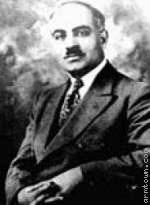
LAUSANNE, Switzerland, March 9 — A prominent Turkish politician was convicted Friday of breaching Swiss antiracism laws by saying that the early 20th-century killing of Armenians could not be described as genocide.
The Turkish Foreign Ministry reacted swiftly to the decision, saying in a statement that it was saddened by the Swiss court’s ruling to punish the politician, Dogu Perincek, leader of the Turkish Workers’ Party, and to ignore “his freedom of expression.”
Mr. Perincek was ordered to pay a fine of $2,450; an additional penalty of $7,360 was suspended.
He was charged with breaking Swiss law by denying during a visit to Switzerland in 2005 that the World War I era killings of up to 1.5 million Armenians amounted to genocide. He has since repeated his statements, including at his trial this week.
In Turkey it is a crime to use the word genocide to describe the killings.
Mr. Perincek accused the judge of “racist hatred” toward Turkey and said he would appeal the verdict to Switzerland’s supreme court.
If necessary, Mr. Perincek told Turkey’s government-run Anatolia news agency, he would take his case to the European Court of Human Rights.
In his closing statement, Judge Pierre-Henri Winzap described the defendant as an intelligent and cultivated person but added that to deny the Armenian genocide was an arrogant provocation because it was an accepted historical fact. Most Western governments consider the killings genocide.
Switzerland’s antiracism legislation has previously been applied to Holocaust denial.
The case has caused diplomatic tension between Switzerland and Turkey, which insists that Armenians were killed in civil unrest during the tumultuous collapse of the Ottoman Empire and not in a planned campaign of genocide.
In its response to the verdict the Turkish Foreign Ministry called into question the legitimacy of the Swiss law and said the case was “inappropriate, baseless and debatable in every circumstance.”
http://www.nytimes.com/2007/03/10/world/europe/10swiss.html?_r=1&scp=10&sq=armenian%20genocide&st=cse&oref=slogin
Friday, August 1, 2008

I'M PROUD OF BEING ARMENIAN!
Indeed,very few nations can have so large number of sufferings, tortures, wars, genocides but still survive, live and prosper!
USSR
Chapter XI: USSR (FROM 1920s TO 1980s)
New losses.
On December 1, 1920 as the news about the Sovietization of Armenia reached Azerbaijan, Narimanov, the chief of the Revolutionary Committee of Azerbaijan, surprisingly declared about the cessation of the Azerbaijan's claims to the Armenian territories and proclaimed Karabakh, Nakhichevan and Zanguezour, integral parts of Armenia. However, just a day later, the Narimanov's decree appeared in a slightly different wording: Nakhichevan and Zanguezour were recognized parts of Armenia, whereas Karabakh was given the right of self-determination. Nonetheless, the strange alliance between the Turks and the Russian Bolsheviks played a fatal role in the final determination of borders. The Treaty of Alexandropol, signed in December of 1920 asserted the defeat of Armenia. Then in March of 1921, Turkey and Russia signed a mysterious Treaty of Moscow to tear Nakhichevan away from Armenia and to attach it to the Soviet Azerbaijan.
In summer of 1921, the Caucasian Office of the Communist Party of Bolsheviks held a number of sessions to solve the Karabakh problem. On July 4, the plenary session issued a decree confirming the belonging of Karabakh to Armenia. However, on the next day, Stalin convened an extraordinary session to transfer Karabakh to Azerbaijan. The Treaty of Kars signed in October of 1921 completed the carve-up of Armenia. As a result of the Soviet and Turkish manipulations, the territory of the Soviet Republic of Armenia was reduced to 30,000 square km. Armenia was even deprived of Mount Ararat, its main symbol.
Fate of Nakhichevan.
During the Soviet rule, Nakhichevan, the Armenian province with the Armenian name and the unique Armenian historical and cultural heritage underwent an unprecedented period of "white genocide" and "ethnic cleansing". Predominant there in the 19th century, the Armenians composed 50% of the population in the 20s. From 1936, when the Turks of Azerbaijan became "Azerbaijanis" instead of "Caucasian Tartars", the Soviet historians followed the instructions of the Communist Party leaders and began creating the so-called "history of Azerbaijan". In order to erase any trace of the region's Armenian past, many unique Armenian monuments were destroyed, including khachkars and churches of early Christian period. The land was then extensively peopled with the Turks while the Armenians left on a large scale. According to the census of 1959, the number of Armenians in the region decreased to 1, 5%!
Stalin's purges.
From 1922 to 1936, Armenia formed part of the Transcaucasian Soviet Federal Socialist Republic, consisting of Armenia, Georgia and Azerbaijan. The new Constitution of the USSR adopted in 1936 dissolved the Transcaucasian Republic. Armenia became one of 15 Soviet Socialist Republics. Like the other Republics, Armenia was governed by the Central Committee of the Republican Communist Party. The 1st Secretaries of the Party were appointed from Moscow. In the 30s, just like the other peoples of the Soviet Union, Armenians suffered from a large-scale campaign of political terror launched by Joseph Stalin. The purges touched virtually every Armenian family. Thousands of writers, artists, scientists and political leaders were executed or exiled.
The WWII.
During the World War II, Armenians made an important contribution to the Soviet victory. Over 500 thousand of Armenians fought for the Soviet army, and half of them fell in battles. 5 Armenian infantry divisions were formed. Armenia gave 4 marshals and 60 generals. The Armenian Church and the Armenian colonies abroad donated large sums of money. After the WW II, the Armenian and Georgian Republics laid territorial claims to Turkey. However, the Soviet Government was not willing to return the Armenian lands, and shortly thereafter stated to have no claims to Turkey.
The new wave of the Armenian migration.
In 1946, many patriotic Armenians from the foreign Armenian colonies decided to repatriate to their historical homeland to contribute the post-war restoration. However, in years1948-1949, Stalin launched a new campaign of terror, and thousands of those repatriated Armenians were illegally arrested and forcibly deported to Siberia and Altay.
From the beginning of the 60s, Armenians began to emigrate from the Soviet Union on a large-scale. The Soviet leaders considered the Armenians, together with the Jews and the Germans as "unreliable elements" of the Soviet system.
The Genocide commemorated.
On April 24, 1965 the Armenians throughout the world took part in the mass meetings and manifestations, to commemorate the 50-th anniversary of the Armenian Genocide. In Yerevan, a grand monument was raised to the 1915-1921 victims' memory. Since then, the funeral marches and meetings on April 24 became an Armenian tradition. At the same time, the Armenian colonies and organizations abroad began the large-scale campaign for the recognition of the Genocide. In the 70s, a number of secret organizations were founded, such as ARA (Armenian Revolutionary Army) and ASALA (Armenian Secret Army for the Liberation of Armenia). These organizations stated to have no faith in the effectiveness of the peaceful demonstrations, and were involved in the terrorist activities. During the following decade, many terrorist attempts were committed against the Turkish representatives in the European countries, in order to attract public attention.
The Karabakh Question.
The Armenian liberation movement also manifested itself in several petitions of Armenians of Nagorno-Karabakh, requiring the reunification with Armenia. The leaders of the USSR discussed the problem in 1967-1970, while Anton Kochynian, Armenian 1st Secretary carried on the fruitless negotiations with the Azeri leaders Akhundov and Aliyev. In 1977, the problem of Nagorno-Karabakh was raised again. However, the issue was shelved again.
Karin the Builder.
Under Karin Demirchyan, the 1st Secretary from1975, the economy of Armenia went through the period of stagnation, just like the economies of the rest of the Soviet Union. However, Demirchyan succeeded in construction and house building and later was deservedly nicknamed as Karin the Builder. Various sites and new buildings modernized Armenia, especially Yerevan. Armenia became a highly urbanized Republic.
http://www.armenianhistory.info/ussr.htm
THE FIRST REPUBLIC
Chapter X: THE FIRST REPUBLIC (FROM 1918 TO SOVIETIZTION IN 1920-1921)
Collapse of Transcaucasian Federation.
The triumph of Bolsheviks in 1917 put an end to the Russian Empire. In winter 1918, the Armenian, Georgian and Moslem leaders of Transcaucasia united to convene the Transcaucasian Federation, which proclaimed the secession of Transcaucasia from Russia.
The Turks, rapturous over the Russian Revolution, took it almost as a miracle produced by Allah. With the decline of the Russian military power, the Caucasus front collapsed, and the decaying Turkish power survived. To prevent the further destruction of the new Bolshevik State, Vladimir Lenin was forced to conclude the humiliating Treaty of Brest-Litovsk. The treaty had drastic consequences for the Armenians. The Turkish forces reoccupied the lands of the Western Armenia, earlier liberated by Russians.
In late May 1918, under the threat of a new Turkish offensive on the Caucasus, the Transcaucasian Federation collapsed after only 3 months of existence. In fact, the Federation was a still-born creature from the very beginning. Insuperable divergences existed between the Armenian, Georgian and Moslem deputations. The Georgians were oriented to Germany, and the Moslems to Turkey, whereas the Armenians, though loyal to the Entente, were supported by nobody. On May 26 the independence of Georgia was declared. At the same time, the Moslems proclaimed a "Musavat Republic of Azerbaijan". This new Turkish state, created in the historical lands of the eastern Armenia, immediately and shamelessly laid claims on the Armenian territories in Karabakh, Zangezur and Nakhichevan.
The independence of Armenia proclaimed.
Left alone, Armenians faced the total annihilation as the 100 thousandth Turkish army crossed the pre-war Russian frontier, annexed the city of Kars and approached the Armenian capital of Yerevan. After having depopulated the Western Armenia, the Turkish military were now about to destroy the rest of Armenia and achieve their goal of eliminating the Armenian nation.
The Armenians raised an army of 40,000 men, including soldiers, officers, volunteers and mass levies. At first the Dashnak leaders wanted to evacuate the population and to surrender Yerevan, but the Military Council headed by the Colonel Pirumian finally decided to do battle. The two armies met on May 28, 1918 near Sardarapat. The battle was crowned with an outstanding Armenian victory. Some 30 thousand of Turkish soldiers were killed; the Turks were flung out. Vahib-Pasha, the defeated Turkish commander, termed the Armenian soldiers as "the best fighters in the world". The Armenians also held defenses at Karaklis and at Abaran.
On the same day of May 28, 1918 Armenia was proclaimed an independent republic. However, the embryo state was devastated, with a dislocated economy, dozens of thousands of refugees and the population starving. The danger of a new Turkish aggression was still imminent. Also, the country was soon involved in a territorial conflict with Georgia. Moreover, the situation in Karabakh was especially dangerous as the new Azerbaijani state made a series of ultimatums to the Armenian population.
In September, 1918 the Turkish troops invaded Baku and joined the Turkish-Azeri mobs in massacring some 30, 000 Armenians. Dozens of surrounding Armenian villages were destroyed.
The Wilsonian borders.
Meanwhile, the European powers found themselves unable to solve the Armenian Question. The unification of the Caucasian Armenia with the Turkish Armenia proclaimed by the Armenian government in 1919 turned out Utopian. After Armenia was officially recognized by the governments of Allies and by the United States, the US President Woodrow Wilson was invited to determine the borders of the Armenian State. According to Wilson's map, a new Armenia would include most of its historically belonging lands. The project would never come true.
Armenia falls to Bolsheviks.
Furthermore, Armenia would face the new territorial losses. Mustafa Kemal, the new Turkish opposition leader, was able to reach an agreement with the Bolshevik leaders of Russia. Enthusiastic with the idea of "exporting the revolution eastward", Lenin and Stalin were prompt in starting an unprecedented financial and military aid to Kemal. At that time Armenia exploded into anarchy as the Armenian Bolsheviks rose in the cities of Nakhichevan, Alexandrople and Kars. The Soviet government hypocritically negotiated with both Dashnak and Bolshevik leaders of Armenia.
In August 1920, the Treaty of Sèvres, signed by England, France and Turkey, bound Turkey to recognize the independence of Armenia and the Wilsonian boundaries.The new Armenian state was recognized by most of the countries, including the United States. However, after the triumph of Mustafa Kemal, the Turks, supported by the Bolshevik Russia, attacked the infant Armenian Republic again. The Armenian and Russian Bolsheviks played a fatal role in demoralizing the population and the Armenian army. The Bolshevik propaganda now called the Turks "socialists" and "friends of Russians". On the other hand, the victorious Russian XI Red Army, after successfully Sovietizing Baku, Azerbaijan, and Karabakh, approached Yerevan to "overthrow the Dashnaks". The disoriented Armenian army retreated, surrendering Kars and the uyezd of Surmali. The whole Armenian population there was then pitilessly butchered by the Turks. On November 29, 1920, Armenia was declared a Soviet state.
http://www.armenianhistory.info/thefirst.htm
THE GENOCIDE
Chapter IX: THE GENOCIDE (FROM 1914 TO 1922)
The Turkish Plan.
It is generally accepted that the Armenian Genocide started on April 24, 1915. The Armenians commemorate this date because on April 24, 1915 more than 200 Armenian intellectuals and community leaders were arrested and then murdered in Constantinople. However, the Turkish plan of uprooting the Armenians from their ancestral homeland was masterminded far beforehand. The outbreak of the WWI in 1914 gave the Young Turks the perfect opportunity to solve the Armenian Question.
At first Dr. Nazim, the Young Turks ideologist, traveled throughout the vilayets (provinces) of the Ottoman Empire calling for the boycott of the Armenian businesses. Then Enver-Pasha, the idol of the Turkish revolution issued the order to form special battalions. Later, these units of violent criminals and Kurdish irregulars attacked, looted and burned thousands of Armenian shops in Dyarbekir. At the same time, Talaat-Pasha, one of the triumvirs and the most influential figure in the Turkish cabinet, ordered to carry out the disarmament of the Armenian villages. Since the Moslem Turkey was involved in war against the Christian countries, the Christian Armenians were considered "unreliable" and sympathizing to their coreligionists. The weapons collected from the Armenians were distributed in neighboring Turkish villages.
Disarmed, arrested and executed.
The Armenian soldiers in the Turkish army were disarmed, put in labor battalions, and then killed. Meanwhile, the legitimated bands of chete (Kurdish irregulars, criminal hirelings) began systematic raids on the defenseless Armenian villages to rape women and ransack houses. In all major cities, the Armenian businesses were looted under the convenient pretext of "war contributions". In October 1914, mass arrests and killings of Armenians were reported in Erzerum and Zeytun. In November, as Russia had declared war on Turkey, the jihad (holy war against non-believers) was proclaimed and publicly read in all the vilayets of the Ottoman Empire. Together with the mass execution of the Armenian soldiers in the army, a number of notable Armenian community leaders, including religious were slain in different cities. In the provinces, the Armenian bakers were publicly charged for poisoning the bread of the Turkish Army.
Hypocricy of Turkish leaders.
In March, 1915 a special decision to exterminate all Armenians throughout the Ottoman Empire was already issued by the Ittihad committee. Meanwhile, a severe censorship was established, and all foreign postal offices in Turkey were closed. Even the neutral US Ambassador was unable to read uncensored dispatches from his own government. In Constantinople, where a large number of Europeans, including foreign ambassadors were present, the Turkish leaders made hypocritical speeches. Enver-Pasha congratulated the brave Armenian soldiers for their admirable service on the Caucasus front, while Talaat-Pasha met with the Armenian leaders shortly before their mass arrests to declare they had nothing to fear.
Armenian defense.
In April, 1915 the regular Turkish troops began the non-stop attacks on the city of Van. The Armenians under the leadership of Aram Manukian organized a heroic defense. They decided to rise up arms after they were informed that more than 30 thousand of Armenians in surrounding villages had been killed in three days. The desperate defense of Van lasted 36 days with 55 thousand of Armenians being killed. The survivors were rescued by the units of the Armenian volunteers serving in the Russian army on the Caucasus front. Later, a handful of unarmed Armenians desperately defended themselves in Shabin-Karahisar, the native village of General Andranik. Another heroic example was the defense of Musa-Dagh in Cilicia, described by Austrian author Franz Werfel (one of my favourite books).
Turkish atrocities.
After the events that the Turks had termed as "revolution of Van", the Armenians were declared "internal enemies" of the Ottoman Empire. In Constantinople, many of the most eminent Armenians, including intellectuals, political and religious leaders were arrested and murdered. Among them were Grikor Zohrab and Vartkes Serengulian, members of the Ottoman Parliament and generally known as friends of Talaat-Pasha. At the same time, the mass killings took place in Bitlis, Mush and Dyarbekir. The special instructions for the detailed procedure of deportations were sent to all Governors of the vilayets throughout the Ottoman Empire. The Armenians would be told they must be deported or relocated, and then marched off to the Syrian deserts between Jerablus, Mosul and Deir el-Zor. Only a small part of them would reach the final point. Many died of starvation, but most of them were killed on the march in extremely barbaric fashion. An American missionary testified to see, while traveling from Malatia to Sivas, a countless number of disfigured corpses all along both sides of the road for 9 hours running. Tens of thousands of dead bodies were thrown to the Euphrates River. In Trebizond, thousands of Armenians were sunk out at the sea...
In July 1915, there were virtually no Armenians remaining in Van, Bitlis, Dyarbekir, Sivas, Erzerum and Trebizond. Only a part of the orphan boys were converted to Islam and adopted by the Turkish families. Soon thereafter, Talat-Pasha told the German Ambassador that the Armenian Question had been finally solved. The depopulation of the Western Armenia was successfully completed.
Deportations continued.
In 1916, the deportations and the massacres continued with unremitting cruelty. The numerous instructions went to exterminate the remnants of the Armenian orphans. The survivors were subject to Islamization. But the most of the deportees who later reached the Syrian deserts were murdered or died from hunger or sicknesses.In October 1916, the German Ambassador Wilhelm Radowitz reported to Berlin that out of the two and a half millions of Armenians in the Ottoman Empire alive were left only 300 000. The rest were killed or deported; some were lucky enough to escape eastward to the Caucasus or somewhere else. The ambassador mentioned "the two and a half millions" in accordance with the falsified results of the census taken in the Ottoman Empire in 1887, under the Sultan Abd al-Hamid. The actual number of Armenians was deliberately reduced, at least 3 times.
End of Young Turks.
The governments of all European countries, and the United States condemned the Genocide of Armenians. Henry Morgenthau, the US Ambassador to the Ottoman Empire, wrote: "...the whole history of the human race contains no such horrible episode as this. The great massacres and persecutions of the past seem almost insignificant when compared to the sufferings of the Armenian race in 1915."
The Ittihad Cabinet resigned in October 1918. The triumvirs and other leaders of the Young Turks fled the country. They later were convicted by different courts-martial. Enver, Talat, Gemal and Nazim were sentenced to death by default. Kemal Bey, responsible for Yozgat massacres, was publicly hanged. Rashid Bey, governor of Dyarbekir, committed suicide. Other culprits of massacres were sentenced to different terms of imprisonment. Some of them were later released; others fled to join the army of Mustafa Kemal. However, the Genocide of Armenians was never officially recognized and condemned by the Turkish government. Even now, the Turkish authorities continue to deny the fact of the Genocide.
Talat-Pasha, one of main designers of the Genocide, was assassinated in 1921 in Berlin by Soghomon Tehlirian.
Enver-Pasha also fell from an Armenian in 1922 in a battle in Tajikistan.
Gemal-Pasha was assassinated in 1922 in Tiflis by an Armenian Tzagikian.
Gemal Azmi, former governor of Trabzon and Beahaddin Shakir, one of the Genocide's propagandists were both assassinated in 1922 in Berlin.
http://www.armenianhistory.info/genocide.htm
WESTERN ARMENIA
Chapter VIII: WESTERN ARMENIA (FROM 1820 TO 1913)
Uprisings in the Ottoman Empire.
The 20s and the 30s of the 19th century were marked by a series of revolts of the non-Turkish peoples throughout the Ottoman Empire. Greece obtained independence in 1829. The Serbs, Bulgarians, Albanians and Armenians were about to throw off the Turkish sway. The fall of the declining Empire seemed inevitable. However, the Turks held on as a result of the European disagreement about how to divide the spheres of influence. Once again, Armenians put their hopes on Russia. During the Russo-Turkish war of 1829, the czar Nicholas I captured Erzerum and was already advancing to Constantinople, but was stopped by European powers. Paradoxically, just 3 years later, Russians were involved in a conflict against Egypt in order to protect the Ottoman Sultan. The inconsistent Russian policy resulted in a number of setbacks for Russia's further expansion. On the other hand, England, Germany and France, though sympathetic toward the enslaved nations of the Ottoman Empire, tried hard to reduce the Russian influence and finally became involuntary allies of the Turks.
First Armenian Political Parties.
During the next decades, the Turk rulers led the policy of large-scale reforms known as the Tanzimat (Turkish for "reorganization"). The reforms were aimed to "civilize" Turkey making it look a more "European" country. The Tanzimat lasted for about 30 years and affected all aspects of political and social life. For the enslaved nations, it marked an unprecedented raise of the national-liberation movement.
The uprisings of Balkan peoples and the plight of Armenians urged the Russian intervention in 1877-1878. After the Treaty of San Stefano Russia gained control over a large part of Armenia and obtained the independence of Romania and Serbia. However, Russia had to step back as a result of the English and German pressure. The Treaty of San Stefano was revised and the Czar Alexander II withdrew the Russian troops from the Armenian territories.
The coming to power of the despotic Sultan Abd al-Hamid II in 1876 put an end to the Tanzimat. Nonetheless, the Armenian liberation movement gathered momentum. The three major Armenian political Parties were founded: Hnchak, Dashnaktsutiun and Ramkavar.
Massacres of Abdul-Hamid.
From 1894 to 1896, the systematic massacres were organized by Abdul-Hamid in order to punish Armenians for their aspiration for freedom. The Sultan considered the Armenian population as an eternal excuse for Europeans and for Russians to interfere. The government instigated assaults on the Armenian villages, that quickly spread to all regions of Western Armenia. Despite the armed resistance in some places, particularly Zeytun, over 200 thousand of Armenians were killed as a result of these bloody pogroms. Historians named Abdul-Hamid "Red Sultan".
Young Turks and massacres in Adana.
Meanwhile, the new opposition Party of the Young Turks rose in the Ottoman Empire. Propagating the attractive slogans of "fraternity and common homeland", the leaders of Young Turks inspired many short-sighted Armenians, who believed in the reality of an "autonomous Western Armenia". As the Young Turks struggled against the Red Sultan, Armenian parties and leaders assisted them and supported financially.
After the so-called Young Turk Revolution of 1908, the Sultan's authority was reduced to the point that he became a sheer symbolic figure. Although an attempt to a counterrevolution was made, the Young Turks managed to retain the real power. Abdul-Hamid, forced to abdicate in 1909 was removed to solitary confinement. He was replaced by Mehmet V, who was only a puppet of the Young Turks. Then, the leaders of the Young Turks founded a new powerful party called Ittihad ve Terakki (Turkish for "Union and Progress").The victory of the Young Turks marked the immediate end to the Armenian illusions. In 1909, a series of bloody rampages took place in Adana, Cilicia, where the Turkish mobs were supported by the Turkish army. The sporadic pogroms took place in different cities. Some 35,000 Armenians were killed as a result of these massacres. In despite of the promises and oaths to "establish order", the threat of the physical extermination of the Armenian nation was imminent.
Andranik.
In 1912, the Balkan wars began. Serbia, Montenegro, Bulgaria and Greece formed a coalition against the Ottoman Empire. The coalition gained a number of important victories and the Turks sued for peace. An Armenian hero Andranik (later known as General Andranik) fought for the Bulgarians forming an Armenian volunteer unit.
The Armenians at death's door.
The First Balkan war marked serious territorial losses for the Ottoman Empire, but during the Second War in the next year the Turks regained the large territories as a result of a discord between the Balkan States. In 1913, a coup d'état within the Union and Progress committee brought an extreme nationalist triumvirate headed by Enver, Talaat and Gemal to the absolute power in the Ottoman Empire. The racist doctrines of Pan-Turkism, Turkish national exclusiveness and Turkish homogeneous state were preached by party's ideologists, such as Zia, Dr.Nazim and Dr.Shakir. Armenians were openly termed as superfluous and dangerous elements inside the Ottoman Empire. In many places, the Armenian bankers were accused of "looting the country" just like the Armenian intelligentsia was blamed of undermining the state foundations. The Armenian nation entered the gloomiest period of its history.
http://www.armenianhistory.info/western.htm
UNDER THE YOKE
Chapter VII: UNDER THE YOKE (FROM 15TH TO MID 19th CENTURY)
Decline of Armenia.
In the early 15th century Armenia was still divided into many small-scale principalities. However, after the conquest of Constantinople by Sultan Muhammad II in 1453, the country gradually lost all vestiges of political sovereignty. Armenia was incorporated into the Ottoman Empire. The systematic invasions and ravages caused decline of the major Armenian cities. The Nakharar system was definitely destroyed. The Armenian Church also remained in disorder until the Holy See was transferred from the former Cilician capital of Sis to Vagharshapat.
A large number of Armenians continued to migrate from their devastated lands to Crimea, to Russia, to Poland, to India. As Constantinople became a thriving center of the Ottoman Empire, its Armenian community increased to the extent that a special see was set up apart from the Patriarchal See in Vagharshapat.The Armenian Church in Constantinople had particular privileges among the other branches of the Christian church.
While the Armenian colonies prospered in different countries, the population of Armenia proper suffered incredible privation and persecution. The peasantry was especially oppressed, discriminated and overtaxed. Several uprising against Turkish conquerors took place, but all of them were brutally crushed.
Partition of Armenia.
From the beginning of the 16th century, Armenia became a scene of confrontation between the Ottoman Empire and Iran. The Armenian population fell victim of that bloody conflict that lasted more than two centuries. Following the final armistice in 1639 the territory of Great Armenia was split into two. The Western Armenia fell to the Ottoman Empire, and the Eastern Armenia fell to Iran.
The Shah Abbas I, the greatest of the Safavid rulers, led the policy of intensive settling of the Muslims on the Armenian lands, while the Armenian population was moved to Iran. A big colony was founded in New Julfa, a suburb of Safavid capital of Isfahan. Very soon, New Julfa became one of the centers of the Armenian intellectual and cultural life, just like Constantinople or Venice. In all of these cities, also in Amsterdam and in Vagharshapat, several Armenian printing houses were set up. The first printing of the whole Bible in Armenian was done in 1666 in Amsterdam, but the first book printed in Armenian appeared in Venice in the early 16th century.
The Russian Hope.
From the early 17th century, Armenians began to place their hopes on the growing Russian Power. A number of messengers were sent to the Russian czars in order to ask protection. The rich Armenian community of New Julfa made the czar Alexis I Mikhailovich a sumptuous present of a golden throne adorned with precious stones. In the late 17th century, the ties with Russia strengthened as military victories of Peter the Great over Persians and Turks inspired Armenians. At the same time, a number of patriots, such as Israel Ori, traveled all over the Europe trying to find support of Christian powers. Unfortunately, their activities brought little results.
The Meliks of Karabakh.
At the same time, the Eastern Armenian provinces rose against the Moslems. Uprisings were headed by the princes of Artsakh (the so-called Meliks of Karabakh). In 1697, the Meliks adopted Gandzasar Treaty, which proclaimed "the entry of Armenia under the patronage of Russia". Unfortunately, the Russian territorial expansion stopped soon, and Armenians met with great disappointment. David-Bek, ruler of Artsakh and Siunik provinces, supported by Mkhitar Sparapet, consolidated Armenian forces against the Turks. However, after David-Bek died in 1730, the Turkish tribes gradually dominated most of Artsakh, proclaiming the Khanate of Karabakh in the late 50s.
The Armenian nation took heart under the reign of Russian Empress Catherine the Great (1762-1796). As a result of the two successful wars against the Ottoman Empire, Russians annexed new vast territories. The Count Potemkin, illustrious statesman and favorite of the Empress, propounded the idea of forming a new Armenian-Georgian Kingdom. A number of enthusiastic rich Armenians abroad suggested financing the project. Unfortunately, it turned out Utopian just like another similar project of creating a Greek monarchy. However, the Russian influence in Caucasus kept growing, while the Persian power fell in decline. In 1800, Georgia became part of the Russian Empire. 5 years later, the rebellious leaders of Karabach proclaimed themselves loyal subjects of the Russian czar. The Persian troops were defeated several times, and the Russian army besieged Erevan. The Treaty of Gulistan (1813) officially asserted the Russian sovereignty over a number of former Khanates including the Khanate of Karabakh.
Eastern Armenia becomes part of Russian Empire.
After the Treaty of Turkmenchaj(1828), the greater part of the Eastern Armenia was brought under Russian control. As a result, a large number of Armenians moved back from Persia to Armenia. The Armenian Oblast (Province) was created, which lasted from 1828 to 1840. From the middle of the 19th century, capitalist relations in the Eastern Armenia developed intensively. The newborn Armenian bourgeoisie invested its capital in the new industrial centers, such as Tiflis and Baku, also in Alaverdi and Zangezour, centers of the copper industry. Meanwhile, the Western Armenia with most of the Armenian lands still remained under the yoke of the Ottoman Turks. The large Armenian population of the Ottoman Empire continued to experience immeasurable sufferings. Periodic uprising took place during the entire 19th century in Sassun, Mush, Zeytun, Van and other Armenian cities, but all of them were severely suppressed.
http://www.armenianhistory.info/under.htm
Subscribe to:
Posts (Atom)